MyTrainingAtlas.com
You train three times a week at home.
When you travel, you don't.
...why is that?
MyTrainingAtlas.com
You train three times a week at home.
When you travel, you don't.
...why is that?
What this is
MyTrainingAtlas is an introduction service for travelling martial artists. It connects travelling martial artists with compatible schools through a formal introduction process.
Is this for me?
You do not need existing contacts in the city. You do not need to speak the local language. You do not need a reputation that precedes you. If you travel for work or family and want to train while away, this service is for you.
Is this real?
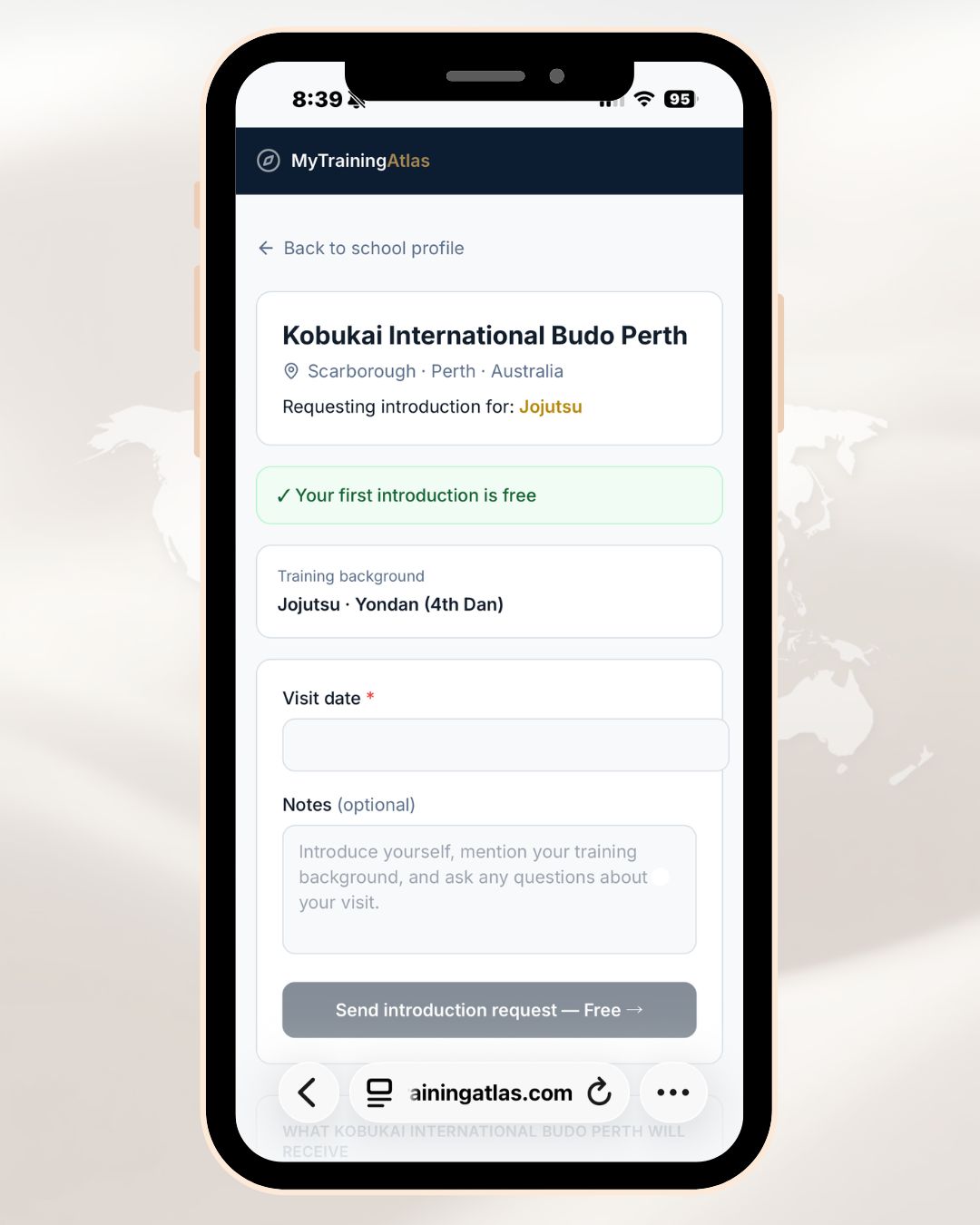
For Schools on MyTrainingAtlas list their art, lineage, visitor requirements, and class schedule.
You can see who is teaching, what they teach, and when classes run before you visit.
Why introductions matter
Every school has different expectations. Introductions help you understand etiquette, lineage, and visitor rules before you arrive. This reduces uncertainty and helps you make a respectful first visit.
Your training travels with you
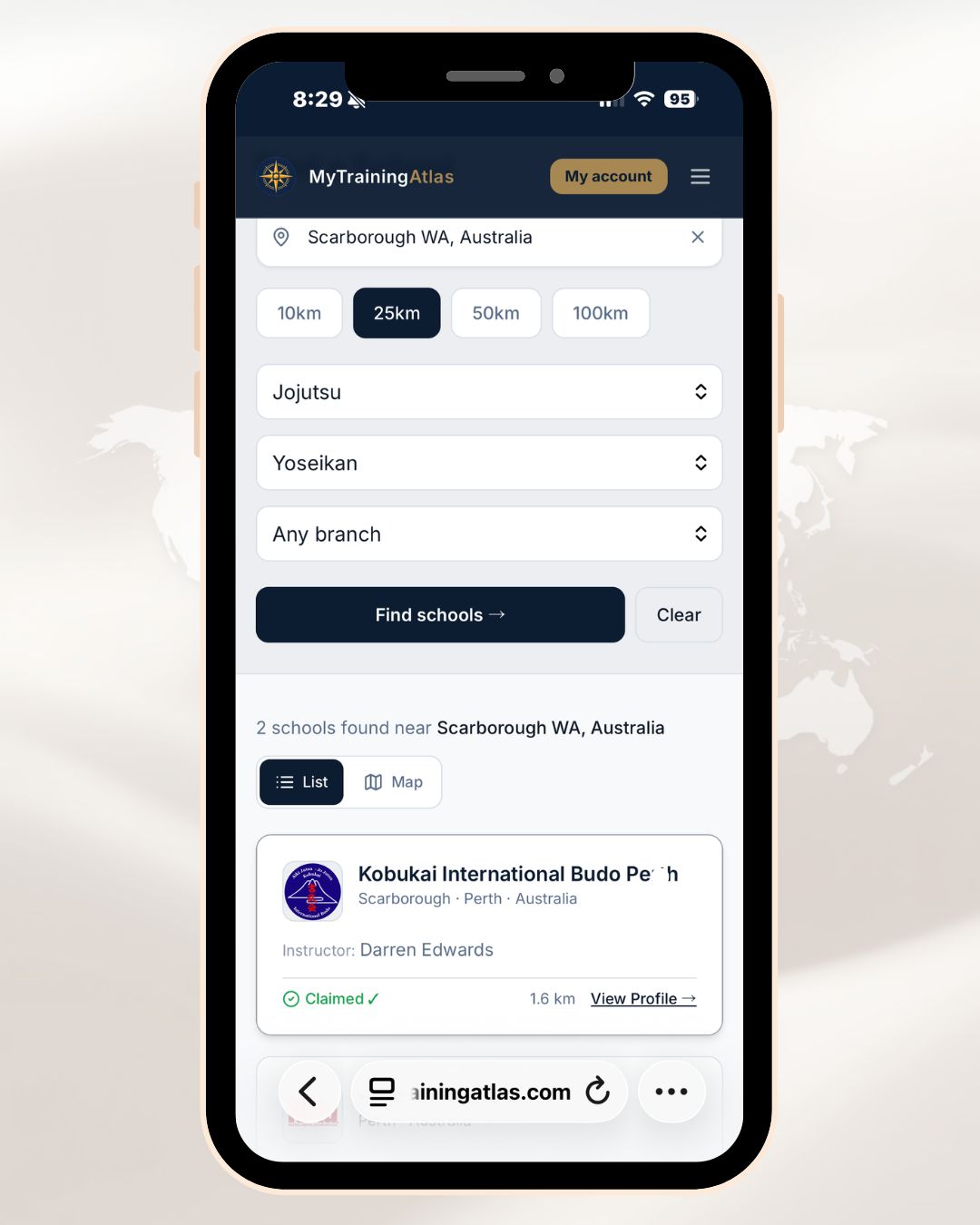
The lineage you train in exists across the world. Wherever you are travelling, there may be a school that shares your art and your lineage — and that would welcome a respectful visit.